
With a gap between the Elite Eight and Final Four, the masses will have tons of time to do deep dives into each of the four squads vying for the national championship on April 6.
But when it comes down to it, you can define Arizona, Michigan, Illinois, and UConn by a handful of key on-court characteristics. Through 38 games, we know these teams' strengths and weaknesses.
Below, we break down one key statistical factor that can lift each Final Four squad to the national title and another factor that could hold them back.
Michigan
What They Do Well: Two-Way Rim Dominance
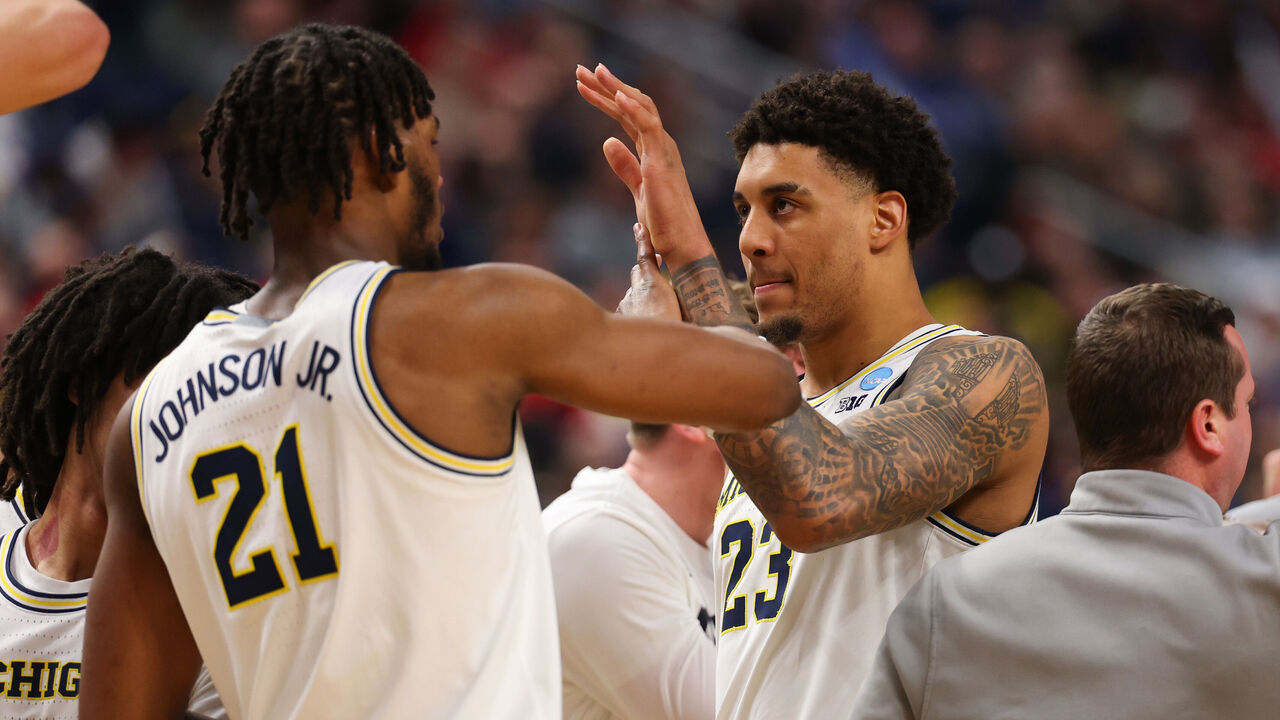
You'd be hard-pressed to find a better team around the rim on both ends of the floor than Michigan going back to the last decade. The Wolverines rank eighth nationally in points scored per game at the basket and allow the 10th-fewest points in that area defensively. As a result, they boast the nation's No. 2 offensive 2-point percentage and No. 3 defensive 2-point percentage.
Diving deeper, Michigan can post these gaudy numbers thanks to its perfect shot profile. KenPom tracks the average distance of 2-point attempts every team takes and allows, and the Wolverines sit in the top 20 on offense and defense.
That means Michigan consistently gets to the rim on their twos, while it forces opponents to take shots 2.5 feet farther from the basket. Naturally, you're more efficient when shooting closer to the rim and less so as the distance increases.
Michigan's size and transition game also shape the squad's dominance. The Wolverines start 6-foot-9 Yaxel Lendeborg, 6-foot-9 Morez Johnson, and 7-foot-3 Aday Mara together, overwhelming opponents with length and physicality. Michigan is also one of the best transition-scoring and defensive programs in the nation. Given that teams shoot nearly 10% better inside the arc on the break compared to in the half-court, the Wolverines' ability on the break is a game-changer in its own right.
What They Struggle With: Turnover Margin
Identifying flaws in one of the greatest teams in modern college basketball history is no easy task, but Michigan is a little shaky in the turnover category on both ends of the floor. The Wolverines rank 288th in defensive turnover rate and finished 14th in the Big Ten in that stat offensively.
That said, those metrics are largely a byproduct of the way this team plays. Michigan is so explosive, big, and dominant in transition that it isn't afraid to take chances with full-court passes and lobs in the middle of the floor.
While those plays can lead to more turnovers, the potential rewards of some of those decisions are arguably greater than if the Wolverines played it safe. That boldness allows them to go on runs like the 21-0 spurt they pulled off in the Elite Eight.
On the other end, Michigan doesn't force many turnovers. It has such a positional size edge in most matchups that it's wiser to stay at home and force opponents to beat them from over the top and in individual matchups. However, an opponent that can match the Wolverines' size and physicality can attack their defense without worrying about extreme pressure. And Michigan's Final Four opponent is the rare squad that can pull it off.
Arizona
What They Do Well: Free-Throw Margin
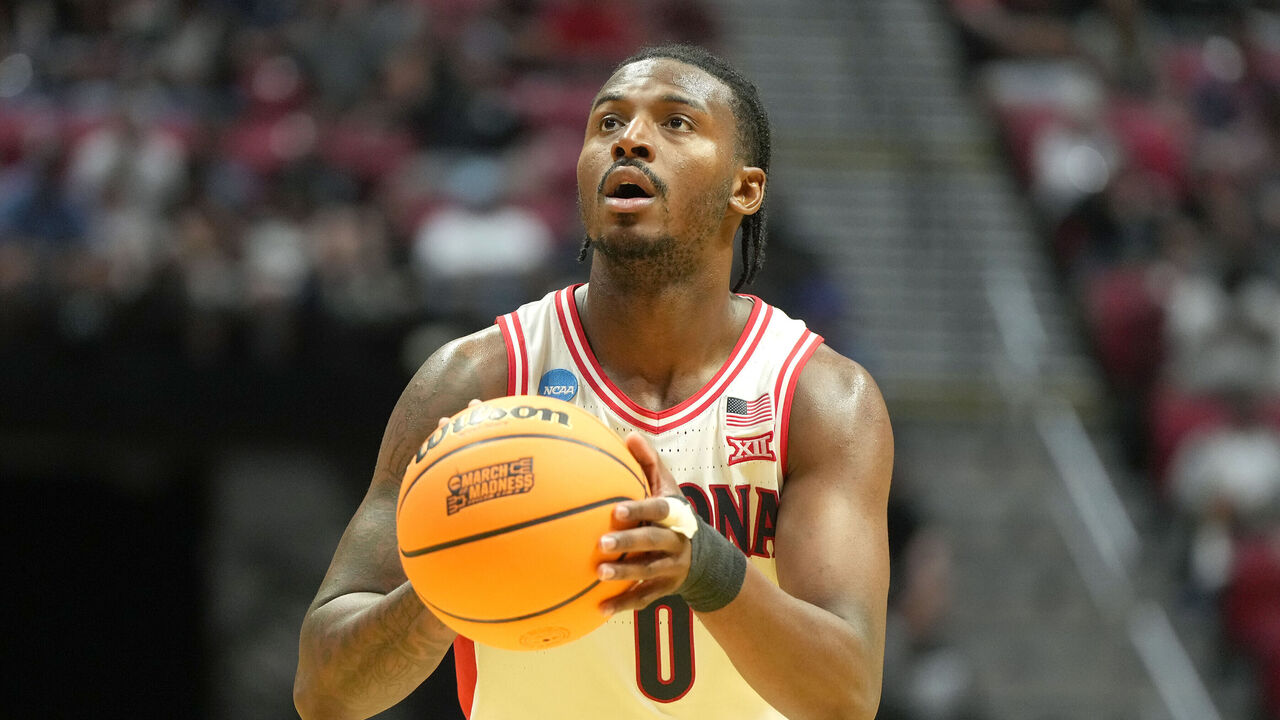
No team in the country does a better job of winning the free-throw battle than Arizona. Through four NCAA Tournament games, the team is outshooting opponents 133-60 at the line. The Wildcats' combination of strength, physicality, and tireless effort to get downhill and force their way to the charity stripe makes them a constant threat around the rim, putting immense pressure on an opponent's interior defense.
And Arizona's success isn't coming from just one player. The Wildcats' six leading scorers have all shot between 98 and 182 free throws this season, and a different player has led the Wildcats in attempts at the line in all four NCAA Tournament games. It's a lot easier for an opponent to keep one scorer off the line, but containing an entire team is a much bigger challenge.
Arizona's very solid 73.5% free-throw percentage also helps. The Wildcats have shot below 65% only six times this season, showing the sort of consistency that tends to surface in big games.
What They Struggle With: 3-Point Shooting
Let's get this out of the way first: You can win a national championship while not being a dominant 3-point shooting team. However, if Arizona runs into a squad that can deny rim opportunities and free-throw attempts, the long-range jumper will become part of the equation. And that will certainly be a factor in Saturday's matchup against Michigan.
The Wildcats take only 26.4% of their shots from deep, the third-lowest mark in the country. They make them at a 36.7% clip, but in conference play, they were only at 33.2%.
Although Arizona doesn't need to take these shots to win games, balance can be important in an offensive system. Two-point attempts are generally less volatile and provide consistency, but there's inherently a ceiling to a roster that can't burn opponents from deep.
UConn
What They Do Well: Taking Better Threes
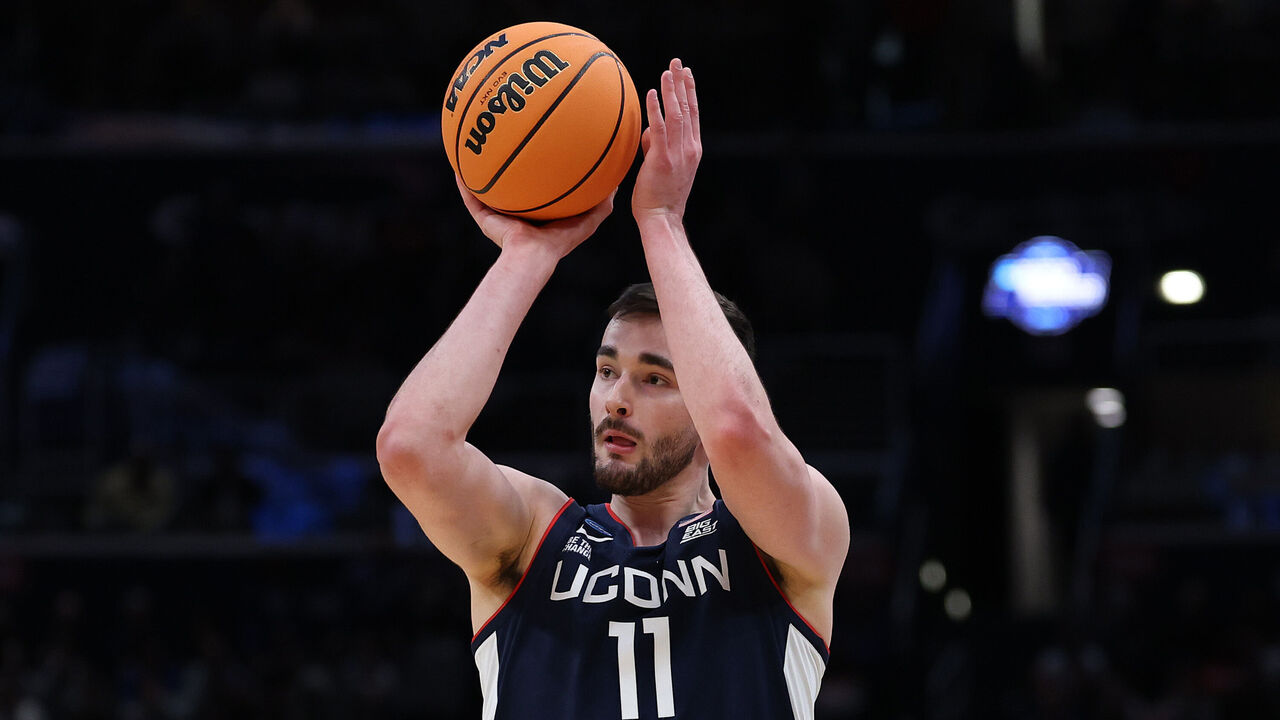
It may not always seem evident in the flow of the game, but in a world where the 3-pointer has become one of the most valuable shots in basketball, UConn does an exceptional job at taking higher-quality looks from distance.
Case in point, the Huskies have taken 347 uncontested, assisted catch-and-shoot threes this season while allowing only 208. UConn's elite offensive flow creates quality looks, and its aggressive on-ball defense takes those away.
That approach is also evident in the assist statistics. The Huskies rank seventh nationally in offensive assist rate and finished second in the Big East for the lowest assist rate allowed on defense this season. In a nutshell, UConn plays as a team offensively and looks to make opponents play as individuals defensively. So far, it's winning the assist battle 74-58 in the Big Dance.
What They Struggle With: Isolation Scoring
Good defenses with a whole week to scout will inevitably sniff out a bunch of UConn's intricate offensive actions that would usually net the team so many quality looks. When forced to be individual creators from the perimeter, the Huskies tend to struggle.
Out of all 365 Division I teams, UConn ranks 356th in points in isolation. It also hasn't scored an isolation point since Feb. 6. The Huskies' preferred method of individual scoring comes in the post with Tarris Reed, but it leaves the squad short of options if a defense can defend him down low and send effective double teams.
Of course, basketball is a team sport, and few play better as a united group than UConn. But given how the Huskies have struggled from beyond the arc in March Madness thus far, they certainly don't have many backup plans if their offensive sets aren't effective.
Illinois
What They Do Well: Offensive Role Allocation
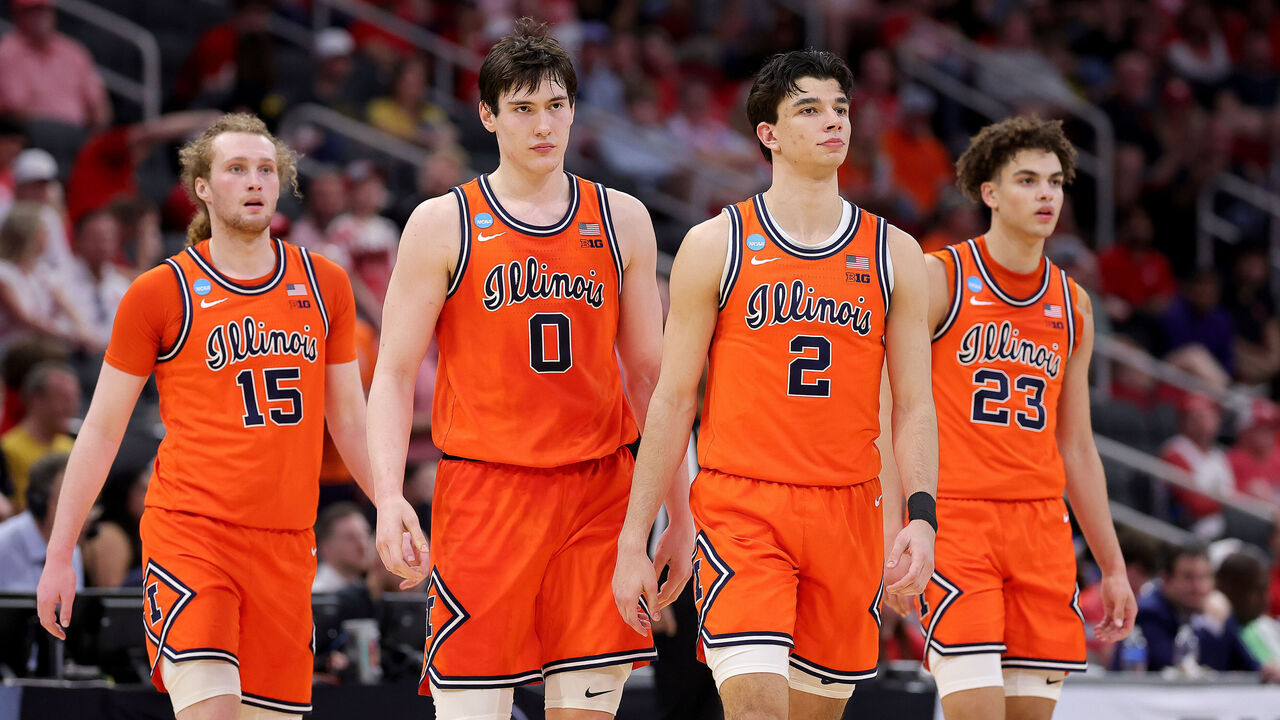
Illinois is perhaps the best team in the nation at understanding everyone's strengths, weaknesses, and value on offense. The Fighting Illini boast the most efficient offense in KenPom history, and all eight rotation players rank in the top 400 in individual offensive efficiency among thousands of athletes.
The team starts with star freshman Keaton Wagler, who leads the unit in points and assists per game. He generates the most offense and is the player the Illini count on when the shot clock's winding down. Meanwhile, David Mirkovic and Andrej Stojakovic are the downhill drivers, combining to take nearly 50% of the squad's rim attempts. Kylan Boswell and Tomislav Ivisic serve as connectors, two players looking to pass just as much as shoot.
And then the final three players: Zvonimir Ivisic, Ben Humrichous, and Jake Davis are strictly play finishers. They've collectively taken 495 shots (78% of them from deep) and have just 65 assists and 30 turnovers.
With such a clear understanding of what everyone aims to do offensively, this unit is almost machine-like in its efficiency.
What They Struggle With: Defensive Variance
One of the most eye-popping stats in the Final Four is that Illinois ranks dead last in the country in defensive turnover rate. Its defense is still solid thanks to its nation-leading size and strong shot profile on that end, but it allows tons of variance to come into play.
Since the Illini's lack of pressure essentially lets opponents take a shot on every possession, they could struggle immensely if a team gets red-hot. In all but one of their eight losses this season, their opponent shot either above 50% from two or 35% from three. Without a disruptive defensive scheme, Illinois doesn't have a contingency plan if an opponent starts hitting tough shots.
This plan works great when there are non-shooting options on the floor, because Illinois will happily sag off and focus on protecting the rim. That's what the Illini did against both Houston and Iowa in easy wins, but that strategy won't work against a UConn group that plays four capable shooters around one big. If the Huskies break out of their NCAA Tournament shooting slump, Illinois' pressure-less defense may not have an answer.
Matthew Winick is a college basketball analyst and consultant. You can find his work on X at @matthewwinick.