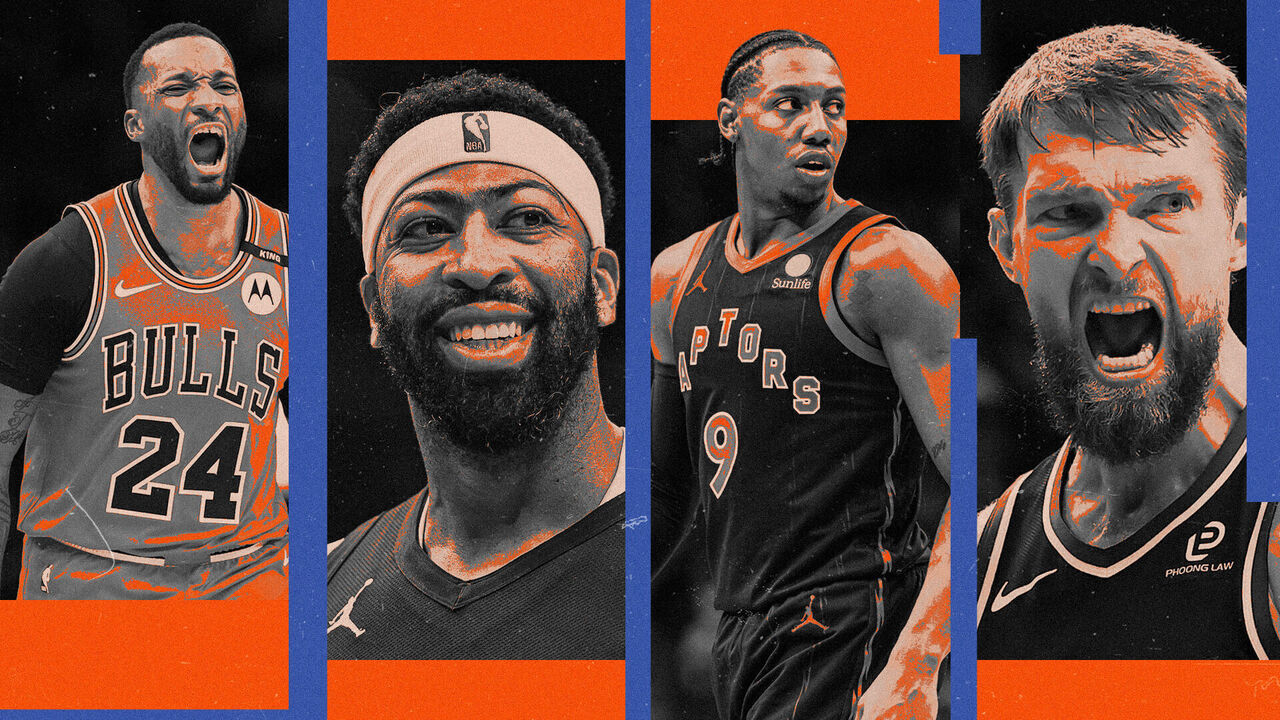
Everyone knows that NBA discourse is dominated by what could happen as much as what's happening before our eyes. With that, welcome to our annual early-season look at the stars who could find themselves on the trade block before the February deadline.
As a reminder, Dec. 15 marks the unofficial start of NBA trade season, because most players who signed new contracts in the offseason become eligible to be moved that day (some don't become eligible until Jan. 15).
Not all of these players have been linked to trade rumors, but their contract status, current fit, or reported displeasure makes them hard to ignore in this conversation. Of the 12 players we highlighted over the last two seasons, eight ended up traded over the course of the ensuing year. Without further ado ...
Anthony Davis, Wizards
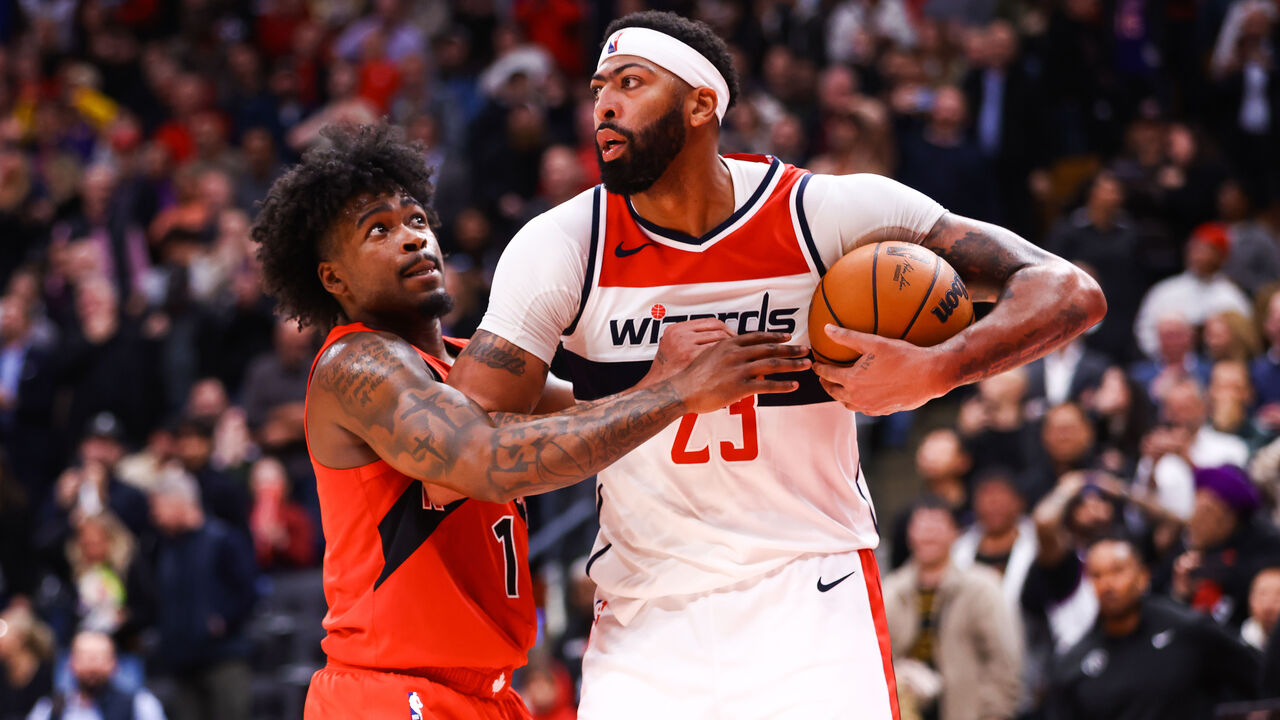
Even at 33 years old and with a long injury history, Davis remains a force when he's in the lineup. The Wizards couldn't have asked for much more to begin the season, with the 10-time All-Star averaging 25.6 points, 10.1 rebounds, and 2.3 stocks (steals plus blocks) per game on 61% true shooting. Most importantly, Davis has suited up for 17 of 19 contests.
Still, Washington is 7-12, is currently stuck between two timelines, and should not give serious consideration to paying Davis whatever it would take to keep him in D.C. Armed with a $62.8-million player option for next season, Davis has some leverage. His next team may not want to give him a massive extension, either, but assuming the team that acquires him is a club squarely in win-now mode, it shouldn't be as concerned with managing his long-term future.
Davis isn't the consistent two-way superstar he once was, but he can sleepwalk to an efficient 20 and 10 while providing some measure of resistance at the rim, and he's currently shooting a respectable 35% on multiple 3-point attempts per game. Any contender that needs frontcourt help should be willing to make a deal, provided Washington's asking price is fair.
The Wizards acquired Davis for a late-first-round pick, a protected first-rounder, three second-rounders, and salary filler. It's reasonable for them to expect multiple firsts in return.
Domantas Sabonis, Kings
The Kings clearly want to turn the franchise over to rookie point guard Darius Acuff Jr., which would make veterans like Sabonis and Zach LaVine expendable. Sabonis would likewise welcome a change of scenery, with the keys to the offense now in Acuff's hands and Sacramento sitting at 2-16. The problem is finding a deal that makes it worth the Kings' time.
Sabonis remains a productive big man who can stuff the stat sheet. The 30-year-old is averaging 15.2 points, 13.3 rebounds, and 5.5 assists on 70% true shooting, but the impact doesn't measure up. Sabonis doesn't space the floor with his shooting or protect the rim on the other end, making it tough to win with him as your starting center. His rebounding, playmaking, and basketball IQ are valuable in their own right, but front offices have (mostly) gotten smarter. No one's trading prized prospects or premier draft picks to pay Sabonis $48.6 million next season.
If the big fella leaves Sacramento, it would likely be in a bad-money-for-bad-money swap.
Zion Williamson & Dejounte Murray, Pelicans
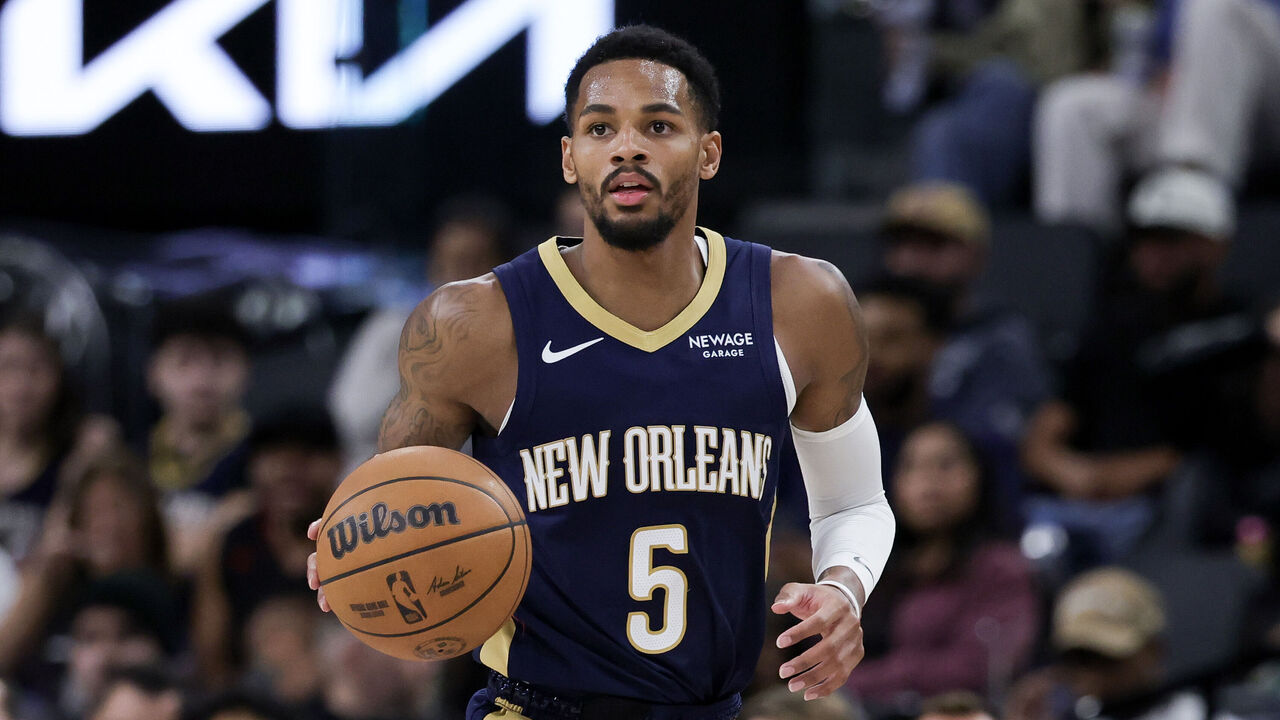
Everyone wants Trey Murphy III, the 3-and-D forward set to earn less than 17% of the annual salary cap in each of the next two seasons, but the Pelicans' asking price has reportedly been astronomical over the years. So, can New Orleans interest anyone in the 'damaged goods' section of their squad?
Williamson has quietly been playing great basketball for the 5-14 Pelicans. He has looked healthy and engaged en route to averages of 21.9 points, 5.4 rebounds, 2.6 assists, and 2.3 stocks on 65% true shooting. If he stays upright and continues to play at this level, the one year and $44.9 million remaining on his contract next season seem reasonable. It's just a matter of how much teams would be willing to give up, and how ready New Orleans is to turn the page.
Prospective teams must also consider whether Williamson can remain effective with less of the ball.
As for Murray, wanting out of town is one thing. Being sought after is another. The one-time All-Star can still get to the rim and make a pass, but he hasn't played defense in years, he's a poor-shooting point guard, and he's developed a reputation for unserious behavior. Why would teams be eager to sign up for that reclamation project with a $30.8-million player option at Murray's disposal next season?
Darius Garland, Clippers
When the Clippers acquired Garland in the James Harden trade less than 10 months ago, the star guard looked like a foundational piece of Los Angeles' future. Now, he finds himself in trade rumors again.
Garland hasn't shot the ball as well as usual to start the season, and he's a poor defender at the point of attack, but with more talent around him and the right defensive infrastructure to protect him, he could still tilt the balance of power if he lands in the right backcourt. Even in what's been a down year thus far, he's averaging about 21 points and six assists on 60% true shooting.
Garland's owed $44.9 million next season, and the Clippers already have their guard of the future in Keaton Wagler. It feels like the kind of situation where Garland could be had for minimal draft capital and cap flexibility (expiring contracts).
Michael Porter Jr. & Julius Randle, Nets
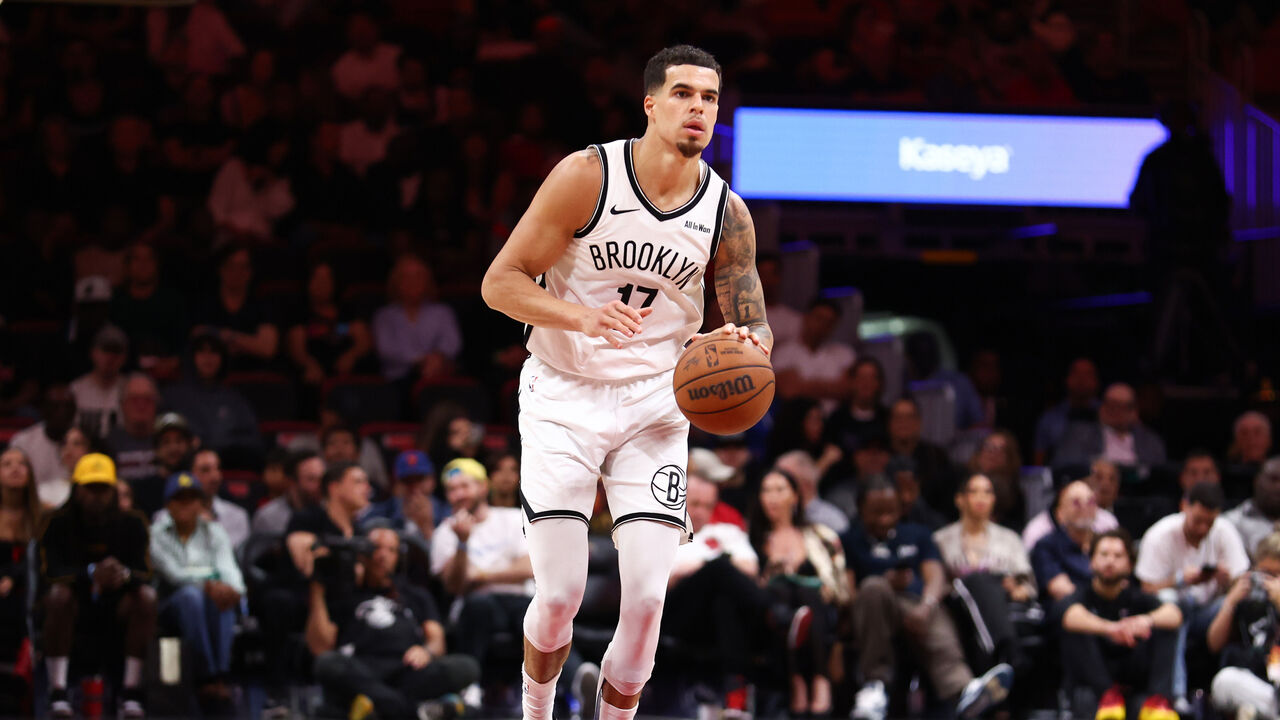
If Porter had a large contract attached to him, teams would be wary of trading for the injury-prone forward, who's been hampered by back issues in the past. But as an elite shooter with size who's playing on an expiring contract, he should be one of the most attractive trade chips. The only question is whether the Nets set reasonable expectations at the negotiating table.
As for Randle, I've often compared him to a regular-season innings-eater in baseball. He's a productive and serviceable player who's almost always available. The soon-to-be 32-year-old has appeared in 90% of games over the last 12 seasons, and he's still averaging 21.9 points, 6.1 rebounds, and 4.6 assists on 61% true shooting. There's value in Randle's bully-ball brand of consistent production from October through April. The catch has always been that if he's your No. 1 option, you're not good enough, and if he's not No. 1, he's not doing much off the ball. Plus, he's an inconsistent defender, at best.
Randle has a $35.8-million player option for next season worth about 20% of the cap. He's almost surely on the trade market, but his contract and limited postseason value might keep him in Brooklyn longer than he wants to be.
RJ Barrett, Raptors
In a best-case scenario where the Raptors are at full strength, Barrett's off-ball work and downhill pressure work perfectly off of Kawhi Leonard and Scottie Barnes, while his defensive shortcomings are masked by a loaded defensive squad.
Unfortunately, a rash of early-season injuries (including to Leonard and Barrett, himself) and uninspired play have the Raptors in a 6-11 hole. Toronto has to figure out how to climb out and then contend. In addition, Barrett's expiring contract makes him the most obvious trade candidate if the Raptors want to make a sizable splash in the backcourt or frontcourt. Moving off the long-term contracts of Immanuel Quickley and Jakob Poeltl would be more desirable, but Barrett's $29.6-million salary is the much cleaner fit as salary filler.
As a subpar shooter and porous defender who can be prone to bouts of tunnel vision, Barrett needs ideal circumstances to contribute as a starter on a contending team. Those limitations, his expiring contract, and Toronto's immediate ambitions make the hometown star an obvious choice for this list.
Naz Reid, Hornets
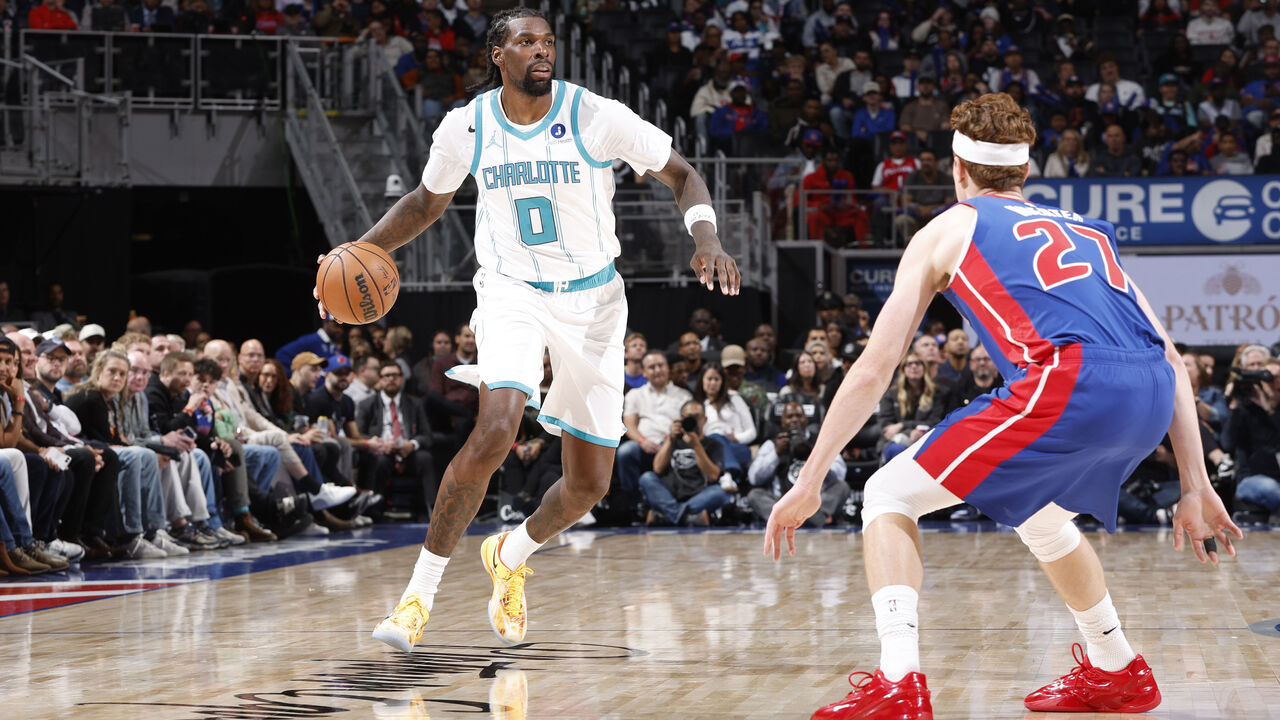
Reid's Hornets tenure is off to a disastrous start after heading to Charlotte in the LaMelo Ball trade. He's been woefully inefficient (38/34/66 shooting splits) and far less active than he was in Minnesota. He was also benched for the second half of an early-season contest for not meeting head coach Charles Lee's standards.
Still, even with up to three years and $80.2 million left on his contract after this season, a sharp front office likely sees the value. Reid's been a tough and smart two-way big man for the majority of his career, he owns a career 3-point percentage of roughly 37%, and he's just as comfortable starting as he is coming off the bench (Charlotte tenure aside). Something tells me he'd be instantly rejuvenated by a winning situation.
Norman Powell, Bulls
Powell immediately emerged as trade bait when the rebuilding Bulls signed the 2026 All-Star to a relatively cheap contract that includes a $22.6-million team option for next season. Powell, currently sidelined by a hamstring strain, is struggling through his worst shooting season (34.1% from deep) in nine years, but a 13-game sample shouldn't dissuade any prospective suitors.
Powell's track record of efficient production speaks for itself. Entering this season, he was a career 39.6% 3-point shooter who had topped 60% true shooting seven years in a row. He's also averaging 20-plus points for the third consecutive season. Whether as a boost to a shooting-starved contender's starting lineup or as a Sixth Man of the Year candidate in a reserve role, Powell should appeal to just about every team with postseason aspirations.
Wild cards: Karl-Anthony Towns (Knicks), Jalen Williams (Thunder)
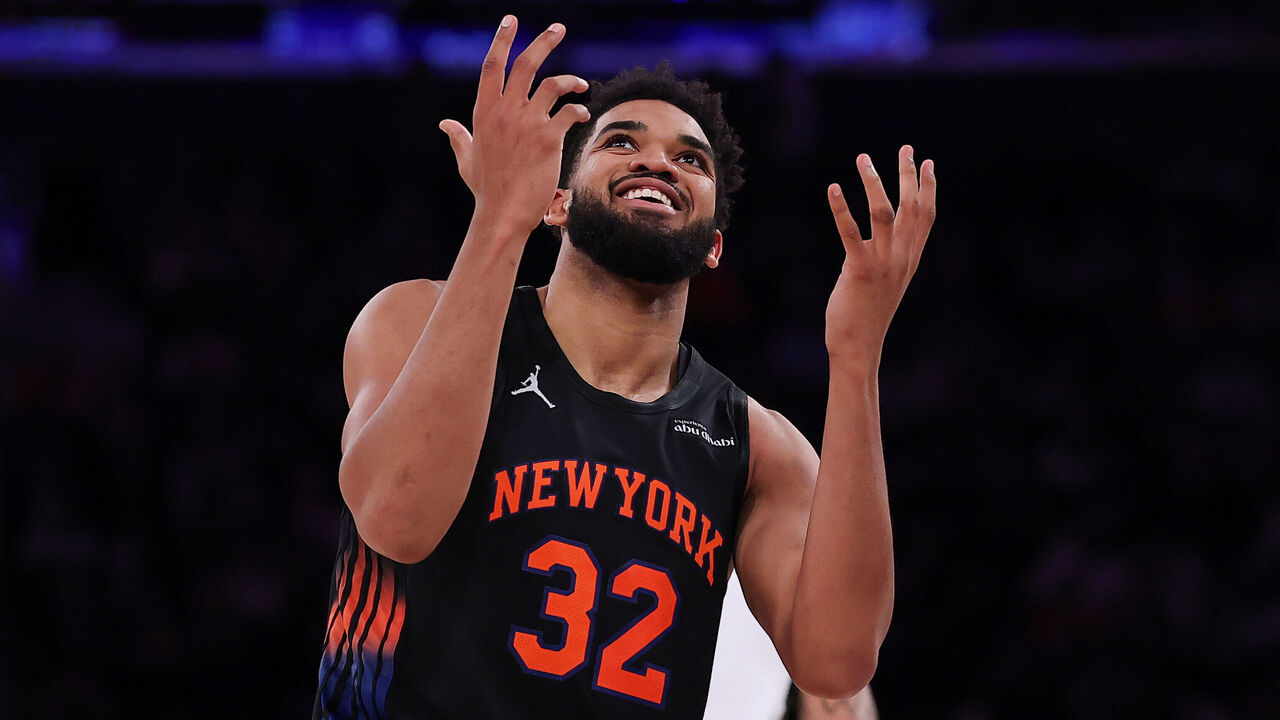
It seems ludicrous to envision the defending champion Knicks trading Towns while he's averaging 21.2 points and a league-leading 13.6 rebounds on 61% shooting inside the arc and 42% from deep, and I certainly wouldn't bet on it. But crazier things have happened. Don't put anything past cantankerous team owner James Dolan given the two sides' failed extension talks and Dolan's second-apron concerns.
As for Williams, the Thunder are a projected second-apron team next season, and he'll likely enter the year having missed 78% of the last two seasons while being owed $198 million over the next four years. General manager Sam Presti never panics, and the smart money is still on Oklahoma City running it back, but what if the Thunder could get off Williams' contract for a short-term title boost in the present, even if it means a potential long-term downgrade?
Other names to monitor: Jimmy Butler (Warriors), Evan Mobley (Cavs), De'Aaron Fox (Spurs), Zach LaVine (Kings), Brandon Ingram (Clippers), Kyrie Irving (Mavs), Mikal Bridges (Knicks), De'Andre Hunter (Kings), Jalen Smith (Bulls).
Joseph Casciaro is theScore's lead NBA reporter.